At the Center of Her Own Life

The film
Storyboard
Scene 1
2 shots · 11sShot 1 · wide · 5s
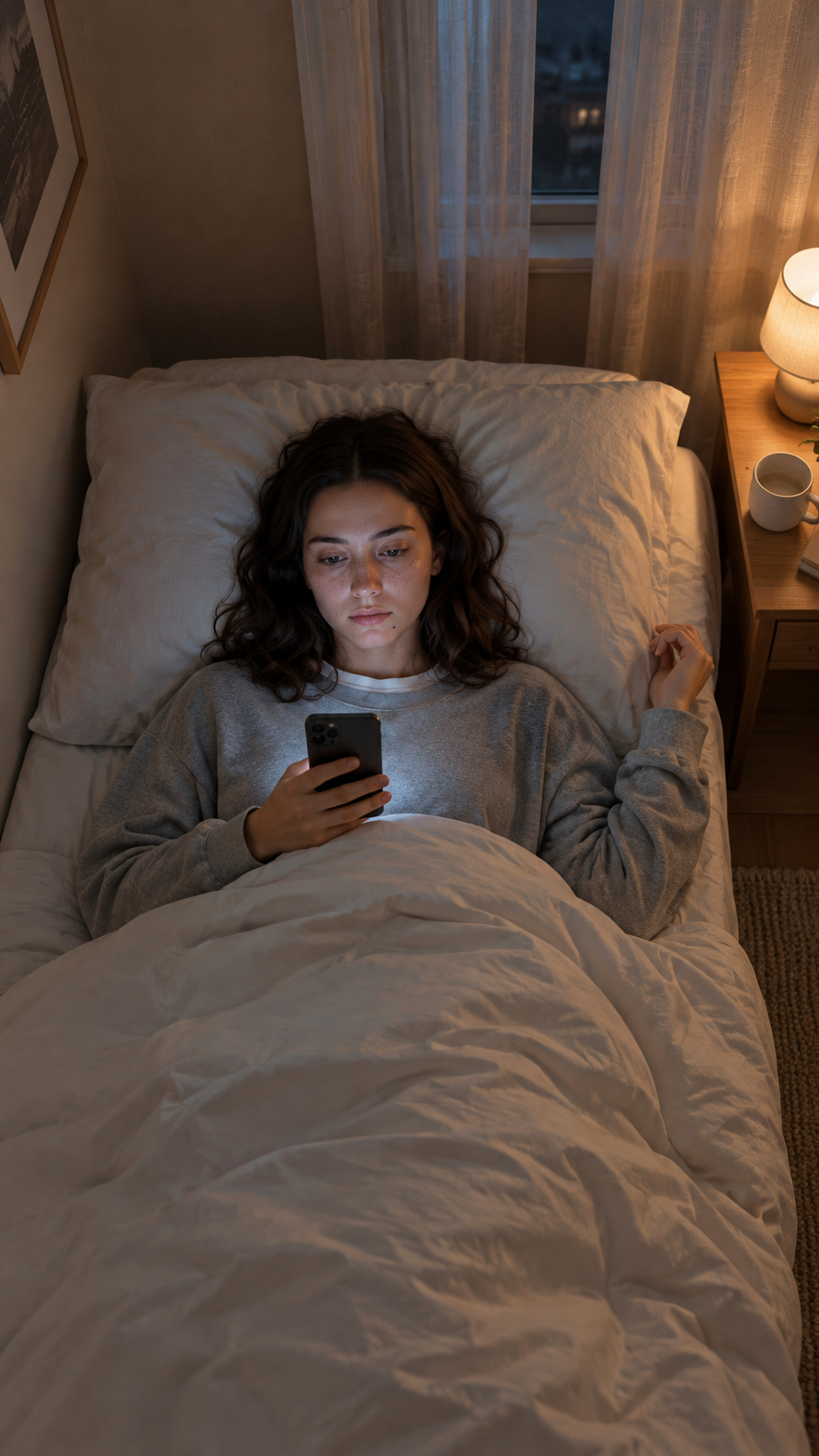
Late at night, Maya lies awake in bed, reopening an old messaging conversation and beginning to type while the room stays still around her.
Shot 2 · close-up · 6s
Maya deletes the message, locks the phone, then reaches for it again almost immediately, revealing how completely the waiting controls her attention.
Scene 2
2 shots · 10sShot 3 · medium · 5s
In a cozy café, Maya remembers a happy moment with someone she loves, then returns to the present and checks her phone while the people around her continue laughing and talking.
- Not rendered yet
Shot 4 · close-up · 5s
At the university library, Maya reads the same paragraph again and again without absorbing it, her phone beside the book and her pen motionless in her hand.
Scene 3
2 shots · 12s- Not rendered yet
Shot 5 · medium · 6s
Maya meets friends at the café and forces a small smile at their joke while secretly checking her phone under the table.
- Not rendered yet
Shot 6 · reaction · 6s
On a city bus, Maya stares through the window as the city passes, physically present but emotionally somewhere else.
Scene 4
1 shot · 9s- Not rendered yet
Shot 7 · wide · 9s
On a park bench in the late afternoon, Maya slowly puts her phone into her bag and notices the world around her for the first time.
The story
Original input — click to expand
“Create a cinematic, photorealistic psychological short film about self-discovery, emotional dependency, overthinking, and learning to put yourself at the center of your own life. FORMAT: Vertical 9:16, designed for an emotional Instagram Reel or TikTok video. VISUAL STYLE: Natural cinematic realism, subtle film grain, intimate close-ups, soft natural lighting, realistic human expressions, shallow depth of field, slow camera movements, muted colors, quiet melancholic atmosphere. The film should feel like a scene from an independent psychological drama, not a motivational advertisement. MAIN CHARACTER: A young woman in her early twenties, with natural everyday clothing and realistic expressions. Maintain the same character, facial features, hairstyle, and wardrobe continuity throughout all shots. SCENE 1 — THE PHONE: Late at night, a young woman lies in bed in a dimly lit room. The light from her phone illuminates her face. She opens a messaging conversation, rereads old messages, types something, deletes it, locks her phone, and then picks it up again seconds later. Close-up of her tired eyes. Quiet, intimate, emotionally restrained. SCENE 2 — WAITING FOR VALIDATION: In a cozy café, she remembers a happy moment with someone she loves. Cut to the present: she sits alone, checking her phone repeatedly, waiting for a reply. The people around her continue talking and laughing, but she becomes increasingly distracted. Use natural light through the window. SCENE 3 — LOSING HERSELF: She sits in a university library with an open textbook. She reads the same paragraph repeatedly without absorbing anything. Her phone lies beside the book. She looks away from the page, lost in thought. Slow close-up of her hand holding a pen motionlessly. SCENE 4 — LIFE CONTINUES: She meets friends at a café. Everyone laughs at a joke, but she forces a small smile while secretly checking her phone under the table. Cut to her riding a bus, staring through the window as the city passes by. She is physically present but emotionally somewhere else. SCENE 5 — THE MOMENT OF AWARENESS: She sits alone on a park bench during the late afternoon. People walk past her, leaves move gently in the breeze, and warm sunlight falls across her face. She slowly puts her phone into her bag and looks around. For the first time, she notices the world around her. No dramatic transformation, only a subtle moment of awareness. SCENE 6 — RETURNING TO HERSELF: Morning sunlight enters her bedroom as she opens the curtains. She studies at the library with her phone tucked away. She walks with a friend and genuinely laughs. Later, she sits alone by a window, peacefully reading a book and drinking coffee. Her phone receives a notification, but she calmly continues what she is doing before checking it. FINAL SHOT: She walks down a sunlit street, seen from behind. The camera slowly pulls away, leaving space around her. The ending feels quiet, reflective, and hopeful rather than artificially happy. DIRECTING NOTES: Use visual storytelling rather than exaggerated acting. No crying dramatically, no theatrical gestures, no fantasy elements, no artificial beauty filters. Keep the scenes grounded in ordinary life. Show emotional change through subtle expressions, pauses, glances, and body language. The film should communicate that loving someone is natural, but losing yourself in the constant interpretation of another person's behavior can make you forget your own life. IMPORTANT: Do not generate visible text, subtitles, logos, or watermarks. Leave the narration and Turkish subtitles for post-production. Prioritize realistic movement, consistent character appearance, and seamless cinematic transitions.”
Make a film like this
Write a paragraph — TaleScene turns it into a voiced cinematic (live action) film with the same faces in every shot.